

The modern psychotherapy world neglects the construct of “character,” even though it desperately replies upon it. From the DSM 5, the psychiatry Bible:
“A mental disorder is a syndrome characterized by clinically significant disturbance in an individual’s cognition, emotion regulation, or behavior that reflects a dysfunction in the psychological, biological, or developmental processes underlying mental functioning. Mental disorders are usually associated with significant distress or disability in social, occupational, or other important activities.”
Did you catch that? There’s a diagnostic leap from individual dysfunction to social disruption.
Just what exactly determines HOW we treat other people and WHY? Why is it considered a “mental illness” to exhibit antisocial (callous, sadistic) behavior toward another person? What if that doesn’t cause distress to the person experiencing the lack of empathy, just to the people in his or her “way?” The DSM 5 can only explain that most people aren’t completely antisocial in personality, without empathy, so therefore antisocial personality confers some harmful difference, some upset in the normative balance of human function. What if the person enjoys the lack of empathy, and doesn’t care that he or she is harming others? There’s a leaning into sociological understanding of harm done to others, at that point, and perceived harm done by not being neurotypical (i.e., feeling visceral empathy). Statistical averages do the heavy lifting in determining who is normal, i.e. empathic enough and independent enough. Remember, if you’re too dependent, that could also be a personality disorder. Therefore, you need to be the mystical right, proper balance of everything, to be “normal.”
Of course, pre-DSM antisocial personality disorder would have been called “psychopathy,” and character would have handily explained why complete antisocial disregard was a moral problem for the person “suffering” from it. That’s not an option at this point, in our post-virtue, post-character ecosystem. There is also a glaring lack of accountability and growth mindset if we consider all mental health symptoms as a deficit caused merely by situational or biochemical factors.
The advent of the diagnostic and statistics manual rendered characterological studies in psychotherapy moot and outmoded, silly puritanical pursuits in the face of objective science. This can be seen as recently in the 1980s, where antisocial personality disorder superseded the former concept of psychopathy. Interior life was cordoned off neatly, hidden behind a veil, with observable symptoms given priority. The age of poeticism, of tending to ones internal garden, was ended, replaced with a shift toward the banal, the measurable and observable, which of course limits human experience in ways that we’re only just now beginning to discover.
Is it shocking that since the 1980s, virtue, ethics, character have been discussed less in an explicit way, the vacuum addressed by “therapy culture” Instead of focusing upon reciprocal community engagement? A bizarre, fragmented value system composed of “gotcha” therapy terms has provided a new moral game with plenty of willing referees, or might we say judges?
One of the problems is that psychotherapy is poised to focus on the most positive outcome only of the patient, with therapists disincentivized to confront and provide any constructive criticism to patients, lest the therapist receive negative reviews. Defining and construing social ethics in a field concerned primarily with the individual is a fraught endeavor, especially when “personal growth” is not even always the reason people seek therapy. Well-intentioned therapists may end up being “pushers” of nothing but affirmations, or “validation vendors” as I like to say.
In current days, evolutionary psychology is gaining traction as a helpful tool in understanding WHY certain human behaviors persist through time, but it is most certainly NOT a moral guidebook or source of justification. Just check out this quote from the article “Definitions of ‘Mental Disorder’ from DSM-III to DSM-5”:
“Today, evolutionary theory provides the best explanation of how a mechanism’s effects can explain the mechanism’s presence and structure. In brief, those mechanisms that had effects on the organism that contributed to the organism’s reproductive success over enough generations thereby increased in frequency and hence were “naturally selected” and exist in today’s organisms. Thus, an explanation of a mechanism in terms of its natural function may be considered a roundabout way of referring to a causal explanation in terms of natural selection. Since natural selection is the only known means by which an effect can explain a naturally occurring mechanism that provides it, evolutionary explanations presumably underlie all correct ascriptions of natural functions. Consequently, an evolutionary approach to mental functioning (7,24) is central to an understanding of psychopathology.”
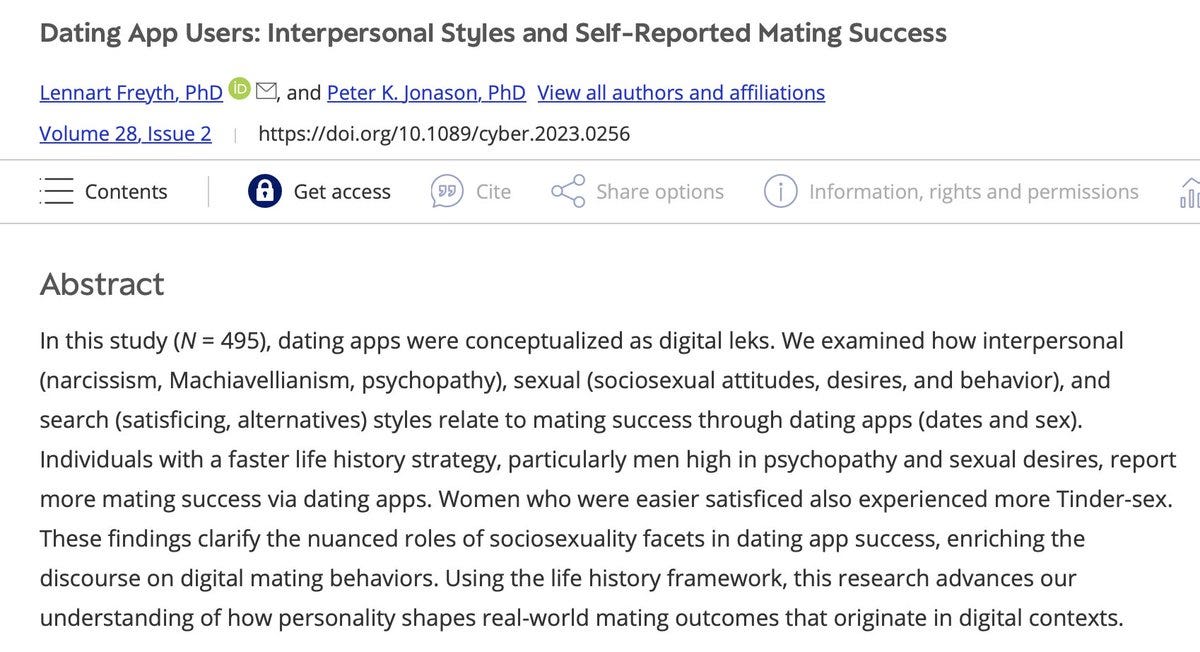
Alright, this essentially says “a mental function exists because it is useful, which justifies its continued existence.” How about the dark triad traits then, the trio of narcissism, machiavellianism, and psychopathy, which have leap frogged through time in a resoundingly triumphant manner? Check out the attached pic of a research study that shows how dark triad stays winning. Should everyone optimize to reduce empathy, increase their capacity for goal-directed lying and manipulation, all in an arms race to be the biggest winner? Evolutionary history probably looks like that, to a large extent, for the biggest “winners,” if maximum reproduction is the ultimate goal. Should we now amplify it even more, into a dystopian hellscape? These are questions I don’t expect to answer easily, as they are part of “wicked problems,” a term which simply means the problems are not “tame” or solved via clear aims or solutions. Rather, wicked problems, such as solving for mental health stigma, lack foundational definitions, rules of engagement, and completion metrics. They are like knotted balls of yarn. One fact is certain: removing character from the psychotherapy world creates a substantial dignity-sized hole that reduces people to causes and effects without responsibility.
One potential solution to this conundrum is a focus upon psychotherapy models that encourage some development of internal, positive attributes, such as the formation of mentalization (the cognitive form of empathy) or the pursuit of one’s own values, such as through acceptance and commitment therapy (ACT)). This is also a great time to acknowledge that psychotherapy has undergone a shift from a more implicitly philosophical science, concerned with the establishment of an optimal lifestyle which serves self and community, to a field that more closely resembles sophistry, or rhetoric, in which anything that makes you feel better should be fortified with logic and rationalization. See the work of Jonathan Shedler for more on bad therapy as a form of mental gymnastics and the verbal, cognitive equivalent of packing peanuts.
Even models like dialectical behavioral therapy (DBT) frame the optimum interpersonal socialization outcomes as maximizing positive outcomes for all parties, when possible. That’s a great model to learn and internalize, for fledgling therapists in today’s self-obsessed yet glaringly non-introspective world.
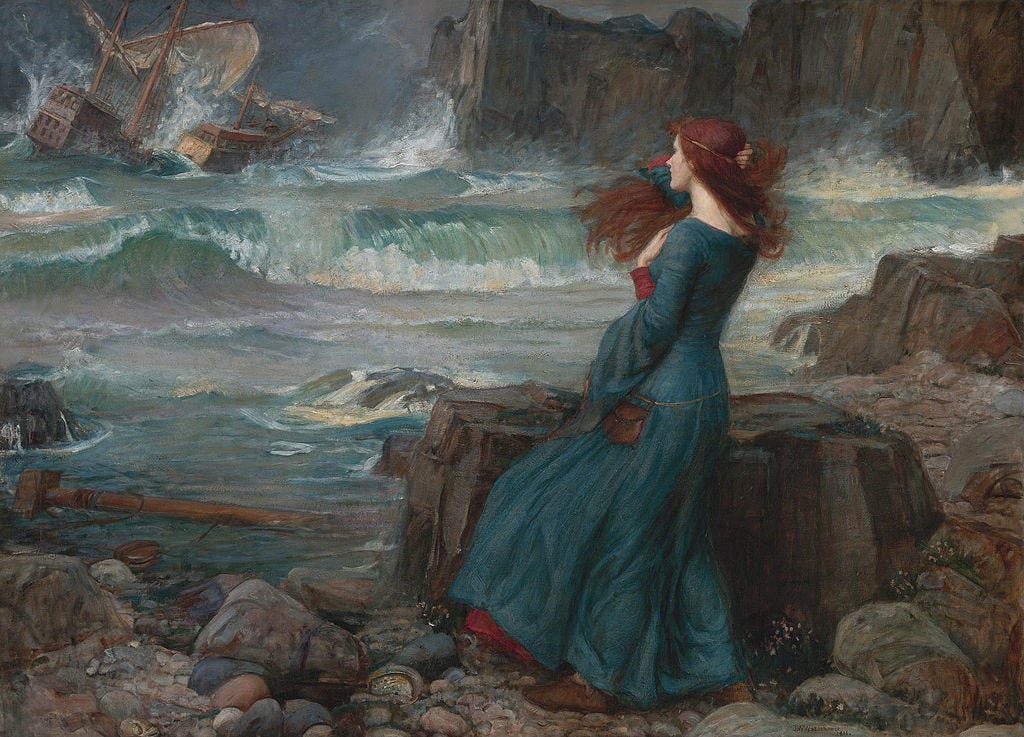
Fun fact for those who read this far: the painting featured at the top of this article is “Miranda” by by John William Waterhouse, 1916. It’s a depiction of Miranda from Shakespeare’s play, The Tempest. Miranda is a deeply empathic character who represents compassion, in stark contrast to her stern father, the magician Prospero.
The essay’s strongest move is identifying the cost of removing character from psychotherapy. Once therapy becomes organized almost entirely around distress reduction, symptom management, and subjective well-being, it loses some of its vocabulary for asking whether a person is becoming more capable of living well with other people.
I’d push one part further: the problem is not merely that modern psychotherapy abandoned virtue language. It is that description gradually displaced development. We became increasingly sophisticated at naming what is happening to a person while becoming more hesitant to ask what that person is becoming.
Wonderful article. It speaks well to the fact that the art of therapy seems it must always answer to the science of therapy. A fair point since we need to verify that what therapy does is effective, but the need to prove seems ravenous and the need to operationalize is incessant. Character has been sheared off to make a sleeker, more aerodynamic version of care, but I'm not sure if it's actually addressing the issues it needs to.