
Backrooms: the Dangers of Nostalgia, and When Therapy Fails (written by a Therapist)
How the fog of trauma makes a maze of memory

Watching this Film the Way It Was Meant to Be Seen
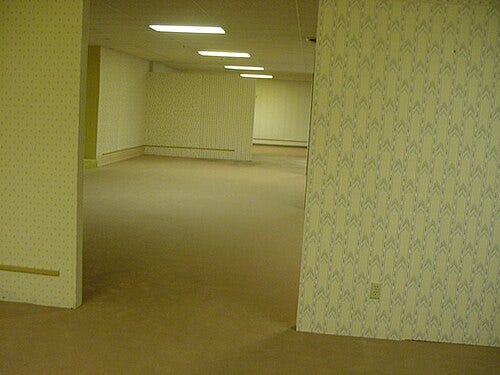
The original Hobbytown USA picture that inspired the imaginations of many.
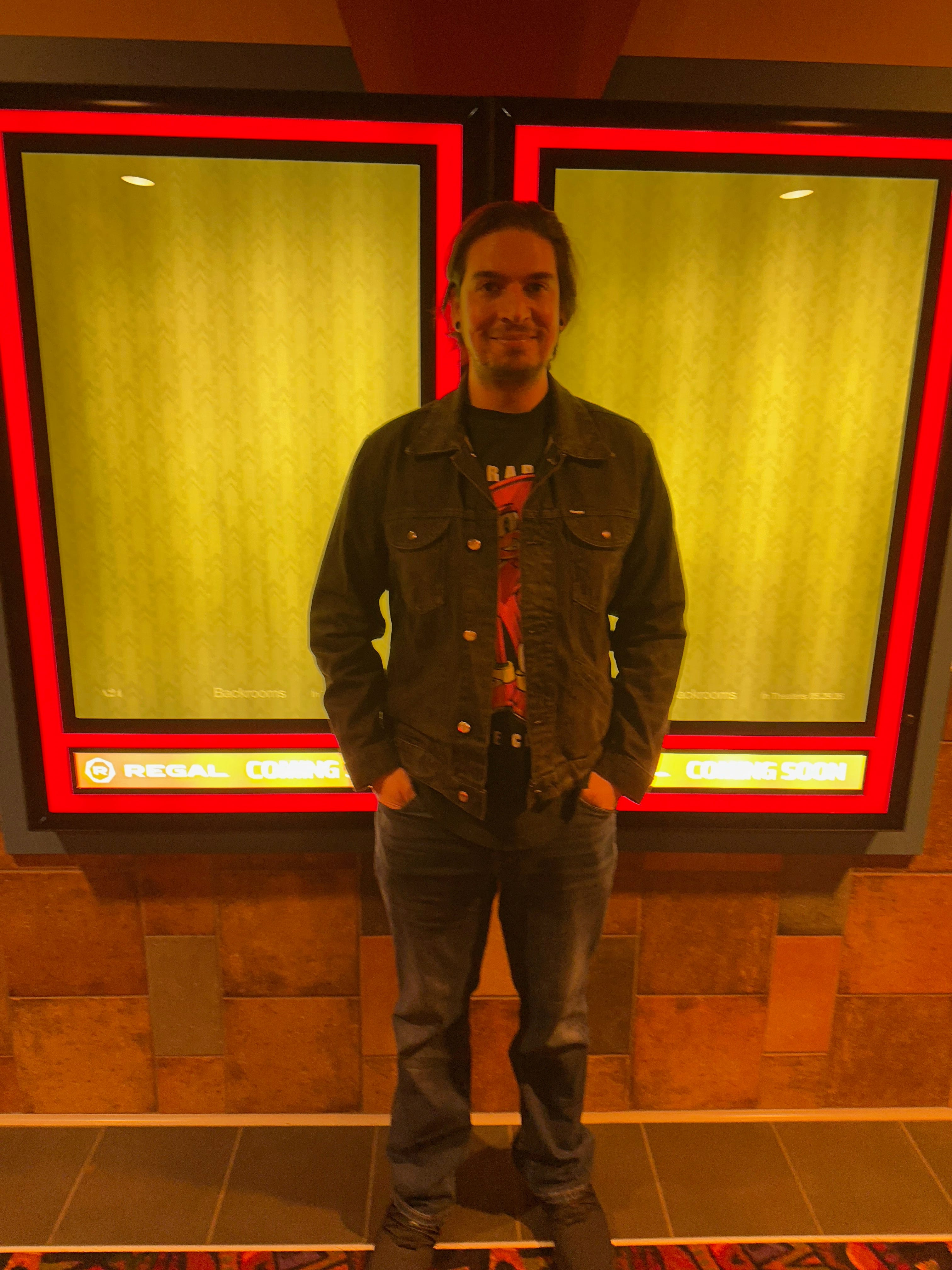
I was able to screen Backrooms, the highly anticipated found footage/traditionally shot horror movie hybrid this last Thursday, the first night it premiered, and I was able to see it the way it was meant to be viewed: at a large theater that forces you to feel as though you are there in “the backrooms,” with all the nauseating, fluorescent yellow glow of nineties office buildings, right alongside the film’s protagonists. Pictured above: me on premiere night, nestled between the blasts of yawning yellow wallpaper that provides the unsettling marketing of the film.
Backrooms is a psychological horror movie based on a YouTube series that came out in 2022. It was created by a then 16-year-old, and he used Blender and Adobe Photoshop. The Backrooms as a concept was a legend from 2019 and 4chan. It was an aesthetic: yellow rooms with no windows and fluorescent lights. There was an image, and it was actually from a building, a hobby shop in Wisconsin. This image was creepy and eerie enough that it kindled the internet’s collective imagination, because it was this 90s fluorescent, purgatorial liminal space.
Standing at the Threshold
The origin of the Backrooms mythology is something called “creepypastas,” which are creepy stories on Reddit that are related to liminal spaces. Liminal spaces are “empty or abandoned places that appear eerie, forlorn, and often surreal. Liminal spaces are commonly places of transition pertaining to the concept of liminality, which means a “quality of ambiguity or disorientation that occurs in the middle stage of a rite of passage, when participants no longer hold their pre-ritual status but have not yet begun the transition to the status that they will hold when the rite is complete (Wikipedia, 2026).” Liminality means standing at the threshold.
It’s a time of passing from one thing to another. So think creepy hallways, waiting rooms, 90s fluorescent light buildings. You can’t see what’s coming next. You know where you’ve been, you don’t know where you’re going. Empty classrooms with chairs is an example given on Wikipedia. It’s very creepy. Why? The purpose of the building isn’t being fulfilled.
This is the milieu of the late 2010s and early 2020s horror within which Kane Parsons, the now 21-year-old (barely old enough to drink) director of the movie Backrooms, came of age. He helped to form it. He took the backrooms mythos of Reddit and the still-shot images there, and created a YouTube found footage horror series. It did so well, garnering tens of millions of views, that it was transformed into a horror movie.
A Therapist Comes into a Horror Movie
The backrooms opens true to its roots, with a found footage segment of a scientist becoming lost in the corridors of a yellow labyrinth.
The film then flashes the title card and switches to traditional scripted horror movie format, opening with Clark, owner of a furniture store that is themed in pirate imagery and aesthetics (Cap’n Clark’s Ottoman Empire). The year is 1990, in case the visuals don't make that clear.

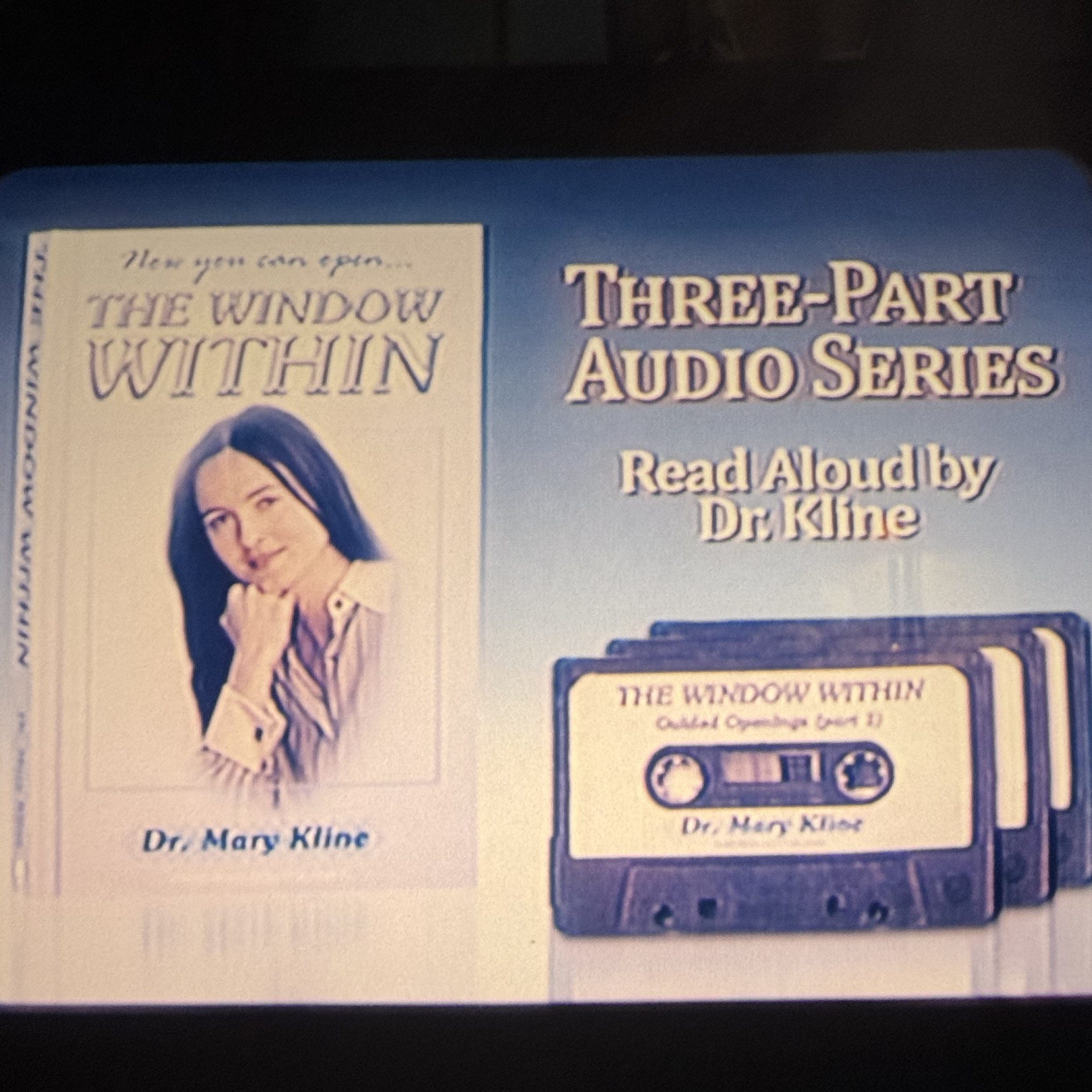
Clark regularly visits therapist Dr. Mary Klein, a psychologist, in order to overcome a mixture of grief and trauma from a divorce which seems to have been caused by a potent combo of alcoholism, resentment, and poor communication. Dr. Kline is a 30-something counselor trying to launch her own self-help guru empire in the form of cassette tapes, which we see (and hear) later.
Mary opens up this main phase of the movie that’s non-found footage in narration, saying that we all have loops, the “paths of least resistance that we go down” with our behaviors, and that we continue to do them and hope that things turn out differently. Mary is setting up what we call the “repetition compulsion” in psychotherapy. The repetition compulsion is doing the same thing again to receive a different result; specifically, it’s the recreation of frightening, negligent, or abusive circumstances in order to master them.
In the final moments of the therapy session, Dr. Mary suggests that she and Clark role play, and she pretends to be Clark’s wife. She accuses him of smelling like alcohol, and he erupts in anger and then apologizes, engrossed in the exercise. In my view, it was interesting for a therapist to take on that perspective and to even be a bit argumentative with the client, playing an adversarial part. I wouldn’t do that as a therapist.
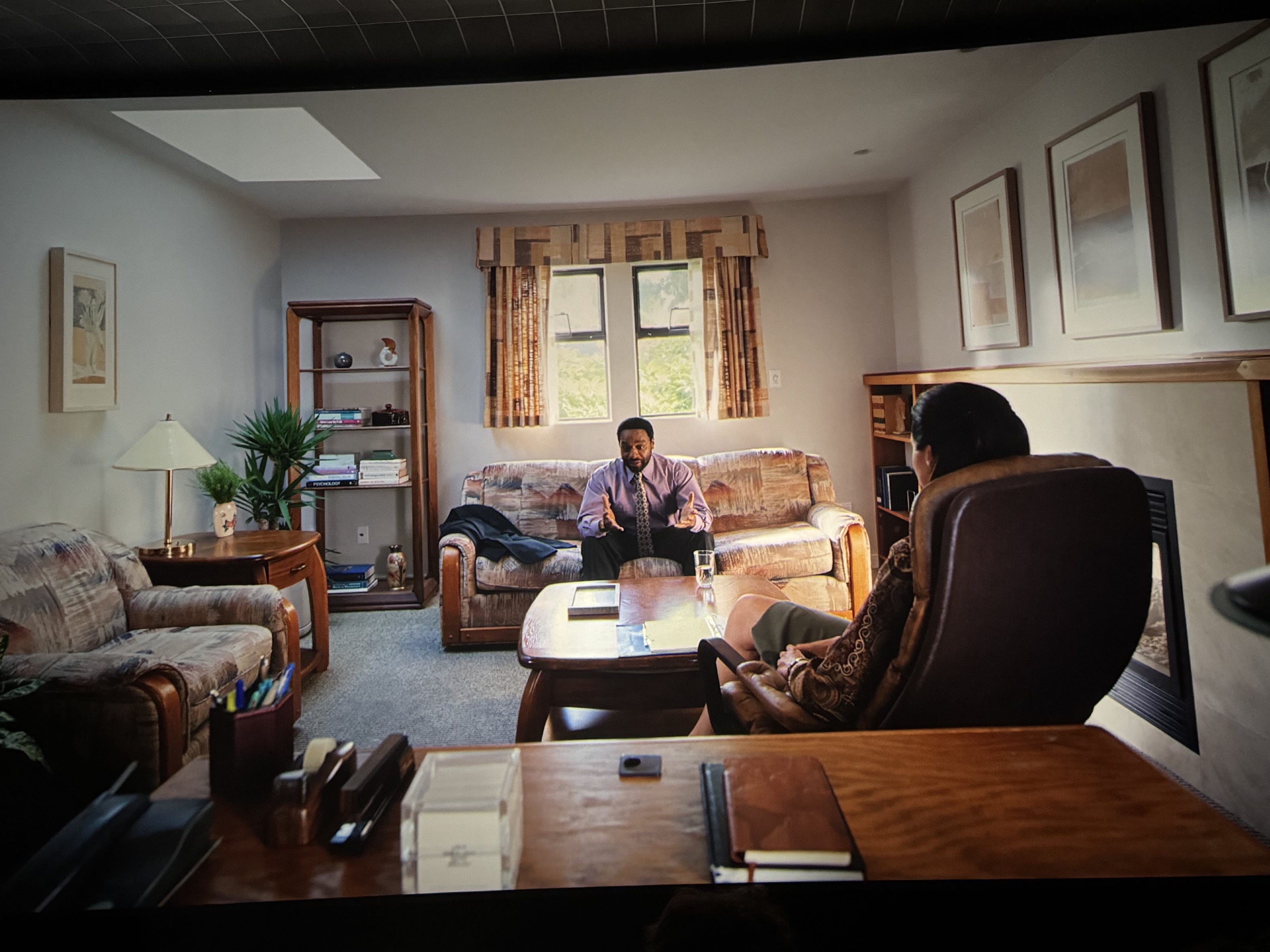
Above: Dr. Mary in her marvelously, unabashedly 90’s office.
This film is set firmly in the halcyon early days of the upstart therapy known as EMDR, Eye Movement Desensitization and Reprocessing. When EMDR was new, it was heavily questioned. If Clark had been an EMDR therapy client, Dr. Mary would have instructed Clark to notice the memory of the argument with his wife, notice the associated intense emotions, as well as the irrational negative self-statement that goes along with it, something like “I’m worthless,” “I’m not enough,” “I’m a terrible husband,” or something similarly bad. They would then desensitize that and say, “notice what happens.” Dr. Mary, not being an EMDR therapist, takes on the role of the trauma herself to enact it with Clark. I found that to linger on the razor’s edge of ethics. It’s not ideal for your client to associate you with their past trauma. Transference, or unconsciously associated a therapist with a past attachment figure, is nearly unavoidable, but that’s entirely different from enmeshing traumatic enactments within psychotherapy.
Worth noting: Dr. Mary has her own trauma from exposure to her schizophrenic mother’s frightening delusions, and the demolition of her childhood home. In a flashback, we see a child Mary pressing her hand into the damp concrete in the driveway of her childhood home, alongside her mom, leaving two handprint depressions. We flash back to the present and observe that Mary keeps the broken concrete piece of her young child handprint, because the home was later demolished. She took that piece with her as a reminder of home. We might think of this as a transitional object that serves a totem of the doctor’s home, providing some comfort and therapeutic nostalgia. The theme of memory-as-comfort-zone saturates this film.
The Matrix of Trauma
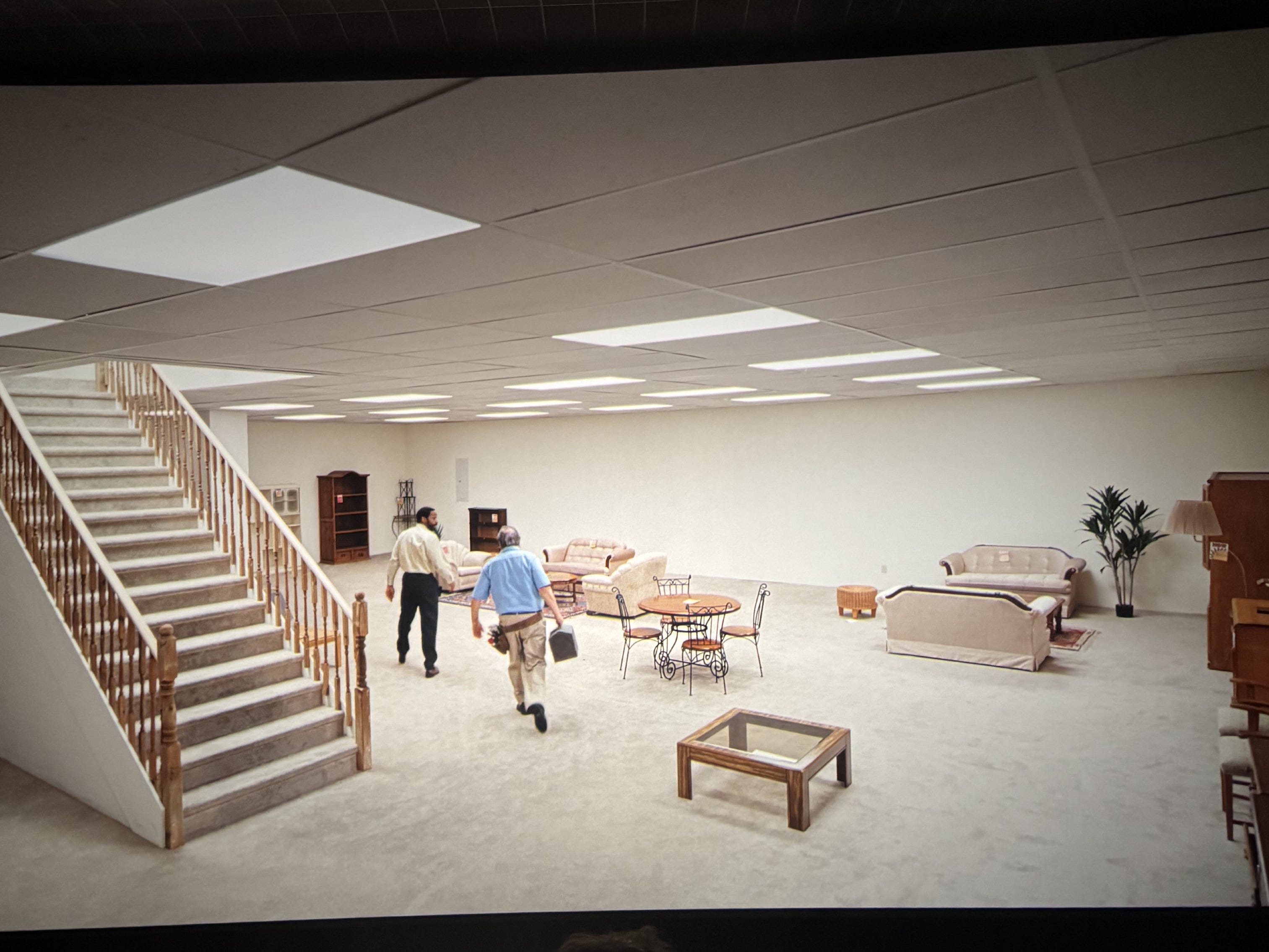
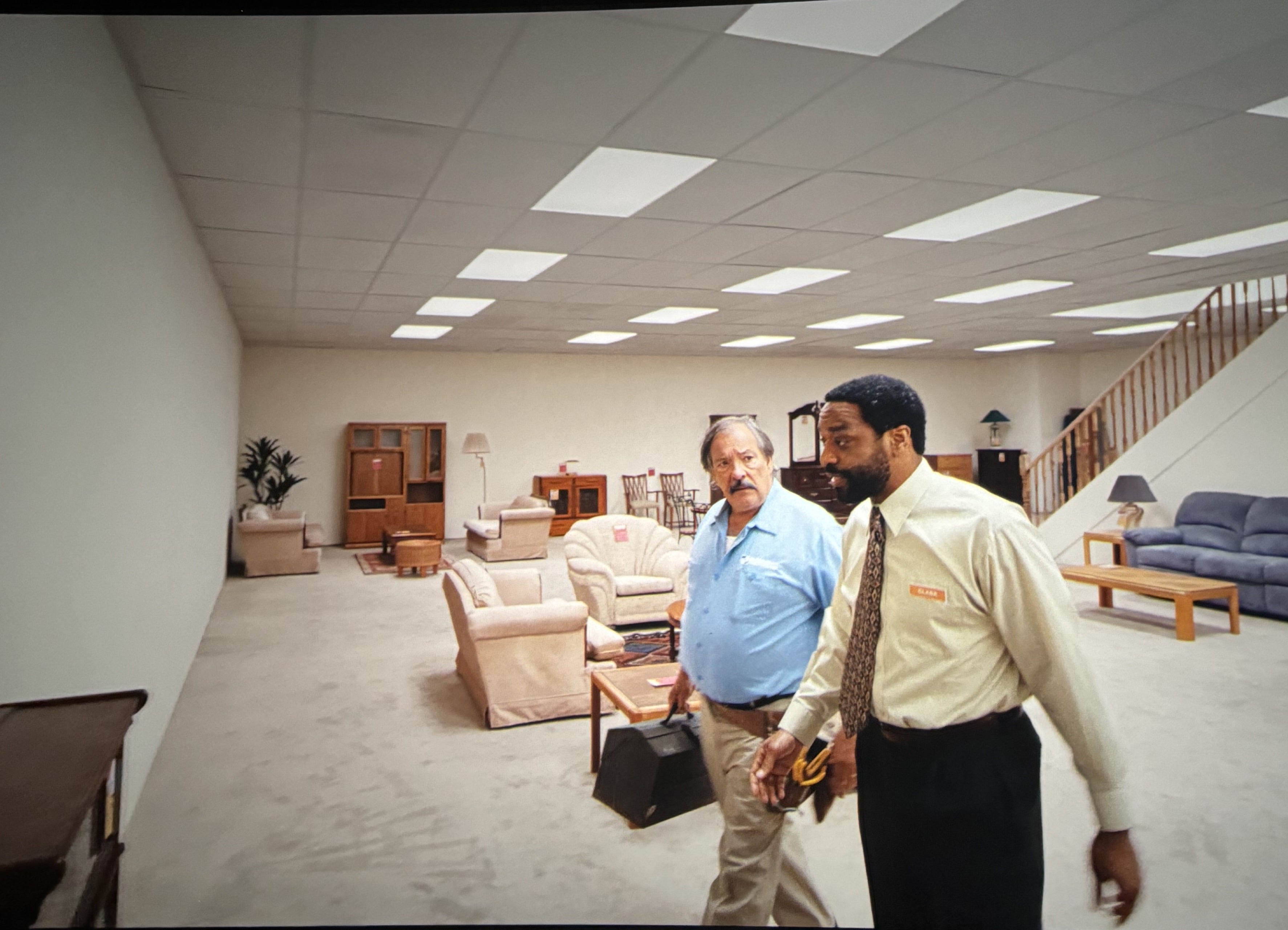
We watch Clark talk to his electrician (pictures below) about the mysteriously high electrical bill and the regularly flickering lights in the furniture store that Clark owns. The electrician finds three colored breaker switches installed at an angle in the distribution board that do not connect to the store, and that look It look glued on as an afterthought. Having taken up residence at the store, living there as he lost his home in divorce, Clark experiences electrical irregularities, such as flashes of fluorescent lights, that lead him to the basement, where he notices a growing, vertical slit on one of the walls where light comes through. When he goes to investigate it, Clark passes through the wall and enters the back rooms, like the ghost phasing through a wall.
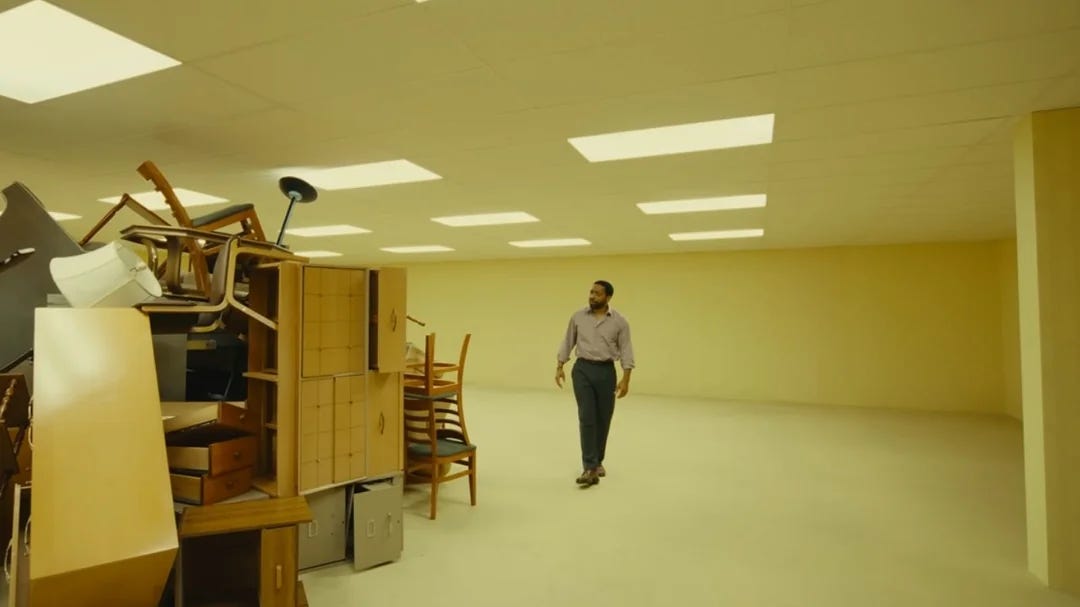
When Clark enters it, he sees mangled furniture that’s all huddled together like this vulgar, shoddy replication of Clark’s furniture store. Everything in the backrooms is a cheap copy of a copy. It all looks slightly wrong and askew. Clark walks throughout the backrooms’ yellow corridors and only flees once he hears loud thump sounds, which indicate he’s being pursued.
The Hypnotic Allure of Familiar Pain
Clark recruits his assistant manager Kat and her boyfriend Bobby to help him en-enter and document the back rooms on film, for solid proof, bringing along a trusty camcorder (for maximum 90s vintage aesthetic). When an entity kills Bobby offscreen, Kat and Clark run for safety, but are separated. Clark runs through various rooms, including one with an eerie swimming pool layout. We witness clark try to rescue a frightened Kat, who is trapped behind a wall in that room, but then we don’t see what happens afterward. Clark then finds his way to a Christmas-themed room with two humanlike figures shrouded in darkness.
We then cut to Dr. Mary, who decides to mount an in-person therapeutic intervention, after receiving a voicemail from Clark that he is “not coming back.” The doctor drives to Clark’s Ottoman Empire store and finds the four strips of tape that Clark mounted in the downstairs area, that resemble a doorframe. These mark the entry point of the Backrooms. Mary pushes ahead, shocked at how she can phase through the wall.
A tied-up Mary awakens with Clark in a space resembling a dining room. Clark is joined by the still life, imperfect copies the backrooms makes of humans. There are three there, including the two figures from the Christmas room. Upon revealing Kat’s severed head, Clark demands Mary continue their therapy sessions via role play, right there in the back rooms. Mary protests but relents, playing along but ultimately breaking character and expressing her frustration that Clark is unaware of his personality deficits and the root of his doomed marriage and personal failures. Mary chastises Clark for providing “excuses” for his failures.
She resolutely says, “Your wife really left you because of the whining. Nothing’s ever your fault. And you don’t change.” He asks, “How can I,” and she says, “I don’t know.” It was disappointing that she then said, “I honestly don’t know,” versus saying “you have to face the trauma head on and not avoid it,” because EMDR therapy does that.
Clark wishes to stay in the back rooms, and Mary reassures him that he’s his own person with his own freedoms, making Clark untie her. He says, “I don’t want to change.” She says, “Then don’t.”
It’s interesting to me that this is an era when EMDR therapy existed. Dr. Mary is not sure how to catalyze healing in patients, even after her many soliloquies, including a recorded, proto-ASMR meditation tape about breaking familiar automatic behavior patterns through new patterns. The doctor wants to be a renowned healer, but is submerged in the maze of her client’s trauma and cannot provide answers for why he should even leave the physical manifestation of his trauma loop. What good is an empty cure? EMDR would say “move through the backrooms and out of them,” whereas endless talking says “keep retracing your steps in these halls of pain, hoping for an answer.”
It’s clear at this point that Clark loves the backrooms and the pliable, mannequin-esque people there with glitched faces that populate the backrooms. Clark loves this place. He gets to wallow. He can interact with make-believe people who don’t criticize him or even speak. He gets the benefits of independence, offered by solitude, but without the loneliness. He can sit in his own mind and know that these substitute people will never leave him or change. Clark’s mental inflexibility makes him a perfect victim for the ensnaring, monotonous jaw of the backrooms.
The backrooms are revealed to be a living remembrance of physical places, a copy of a copy of buildings with copies of copies of copies of people in them, remembered in uncanny valley inaccuracy. Think of the backrooms as a disembodied ghost of a building with people in it, to represent the people that lived there, but not quite right. It’s like a memory of a memory, similarly to a rumination of past experiences, replayed with greater sadness or other negative emotion. The backrooms are trauma-tinged memories where emotion is privileged over accuracy.
The Traumatology Analysis
Clark metaphorically let his trauma win. Clark is reenacting his divorce, and the pattern of pushing others away, but this time by literally exiting society to live an artificial world. Clark wallows in those memories. His therapist tries to help him role play his way into new answers. He refuses, and he lives in the showroom of the furniture store that he owns. He succumbs to exploring the backrooms over and over and enjoys getting lost there instead of being in the real world. He’s absorbed in his own reverie, instead of making new connections in the real world.
He is so immersed in his trauma, his therapist literally goes into his trauma, in the form of entering the backrooms. The backrooms is like a shared trauma zone. It’s the collective Jungian memory of buildings and trauma and the versions of people at their worst and most grotesque. It’s almost like the collective unconscious in a Jungian sense, but of buildings that are holding counterfeit versions of the people that live there. Dr. Mary goes there to save him and he still chooses not to leave. He still says, “I choose the trauma,” symbolizing resignation to the repetition compulsion.
Even Clark’s therapist is forced to admit that she cannot offer any real mode of change, to help Clark overcome his self-sabotaging habits.When he does that, the traumatized still life version of him that’s less him, and more just automatic fight, flight, freeze response kills him. The version of Clark that’s his worst impulses destroys him and goes on living, which is what happens when someone allows their trauma and paranoia to take control. They’re living as a shell of their former self. That’s metaphorical in life, literal in the backrooms.
Mary escapes from Clark’s trauma when he chooses to stay there rather than leave with her. He is no longer her patient, therefore she has no reason to remain in his traumatic landscape. She flees the backrooms and is able to escape.
How Trauma Builds Rooms
Dr. Mary is captured by people in hazmat suits as she runs, and she collapses unconscious. Throughout the film, from the opening found footage segment to a mysterious man watching clark via a camera in the bookrooms, a mysterious organization of scientists have been show to be aware of the backrooms. This agency, Async, was once a company that developed MRI machines until their mission changed upon their discovery of the liminal rooms, with their new objective being to map the whole space. When humans enter, the memories they have of the places they know are added to the backrooms locations. Anyone who enters the back rooms brings their trauma and their memories into it, which creates more rooms. It’s as if everybody’s trauma coheres together and continues building physical manifestations into one another.
We witness several rooms based on buildings from Mary’s memories, along with a newly formed still life of Mary sitting in a poorly copied interrogation room. That’s where the movie ends.
The Real Horror: Failed Therapy
This film is a metaphor for the power of trauma and familiar pain, including loneliness and avoidance of intimacy, in determining our choices. It also addresses vicarious trauma and vicarious burnout, caregiver burnout, compassion fatigue. We see a therapist who allows a case to “get to her” so much that she enters into the trauma directly to pursue a client.
The film is a clear metaphor for the traumatic, enticing urge toward the repetition compulsion. The lead character, Clark, an unhappily divorced furniture store owner who wished to finish architect school, is a man of pure regret, both professionally AND personally. Clark stood at the liminal threshold of his own trauma and chose not to progress forward into the unknown, including the possibility of hope, but to instead choose familiar pain. It’s worth noting that the job Clark hated, being a themed furniture store owner, could have saved him, as the ASYNC scientist (Phil) who has been watching Carl in the backrooms then sees a commercial featuring Carl, and realizes the backrooms are actually now connected to the store. Phil was on-site, ready to assist Dr. Mary as she fled the backrooms, because he knew where to look, after watching Carl’s pirate furniture store commercial. Clark could have used his less-than-ideal job as a source of salvation, but because it wasn’t his ultimate, dream job, he didn’t find escape from the backrooms worth it. He decided not to mount an escape from his trauma.
Another real horror of the backrooms is a therapist giving up on a client, openly admitting that she hasn’t a clue how to help him change the behavior that he keeps stating “is just how he’s wired.” I think that’s going to bother people, even on an unconscious level. It is a compliment to the film’s tenacity and intellectual resolve that it doesn’t rely just on jump scares. This movie focuses on real life mental dynamics, to the point of depicting psychodynamics.
The theme of Backrooms is that if you do not acknowledge and integrate your shadow self, you will be absorbed by it, and turned into a shell of your former self, a mere caricature. We see that nostalgia is actually dangerous, because it can stall your progress in the present, and memories aren’t always all they’re cracked up to be. We transform them into better or worse versions.
The backrooms are the gritty, traumatized collective unconscious of buildings that mattered to us, and they house versions of ourselves that are most debased, unconscious and coarse. It’s worth looking at as a movie, and I hope you find it worth your time as I did.
Greetings! Kindly consider allowing me to share my Backrooms reflection here. I just saw the new movie Backrooms by Kane Parsons. Going into it, I expected to witness a visually disorienting, overly abstract pop-culture phenomenon. Instead, I encountered an engaging storyline that serves as thoughtful social commentary on the nature of the mind, people’s struggles to overcome self-limiting habits, and humanity's awakening consciousness. Check out the video in this blog post to hear how the plot of this movie, as I understand it, relates to Vaishnava teachings from ancient India on the nature of consciousness.
https://awakeningself.substack.com/p/a-bhakti-yoga-commentary-of-backrooms
Greetings 🦊 I am not a horror film fan, I’ve had plenty of horror in my life, which EMDR therapy helped me to move through and now I live a trauma free life. I am a fan of yours and appreciate your work, dedication and wisdom. A great informative article which I learned a boatload from. Have yourself a beautiful day, Jeremy✌️&🧡Geraldine